

Guangzhou Hengchao Automation Technology Co., Ltd
We are a high-tech enterprise integrating R&D, design, manufacturing and sales. Our products include four-side automatic production line/double-side automatic wedging machine/ household filter automatic wedging production line, sweeping robot filter equipment production line, semi-automatic filter automatic wedging machine, sealing ring automatic cutting machine and other series of air conditioning filter automation equipment.
Why Choose Us
Rich Experience
Guangzhou Hengchao Automation Technology Co., Ltd. (HC) has been producing air conditioning filter automation equipment since 2016 and has become a well-known brand of air conditioning filter automation equipment in China.
High Standard Products
We are a high-tech enterprise integrating R&D, design, manufacturing and sales. Our products include four-side automatic production line/double-side automatic wedging machine/ household filter automatic wedging production line.
Wide Product Range
We mainly focus on 4 major air conditioning filter application areas, including automotive air conditioning, household filter, sweeping machine filter, industrial primary filter, etc.
Complete Qualifications
The company has passed ISO 9001 and ISO 14001 management system certification, and obtained a number of patents and CE, CQC and other certifications.

A shrink film packaging machine is a packaging powerhouse that applies heat to shrink a plastic film around a product. This process, often automated but also available in manual and semi-automatic variants, transforms packaging into a tightly sealed, protective cocoon.

Semi Auto Carbin Air Filter Gluing Machine
Hot glue melt machine is a comprehensive box which is without the hassle of a glue gun. This machine helps to improve the standard of productivity and overcome waste.

Details:
Maximum filter width: 700mm
Production speed: 4-22m/min
Glue strip distance: 25.4mm
Number of glue strip: 2*25strips (with glue break function, all with solenoid valve on each nozzle)
Power supply voltage: 380V/50HZ

An automatic cabin air filter edge banding machine is a specialized piece of equipment designed to apply edge banding material to the exposed edges of panels and boards.
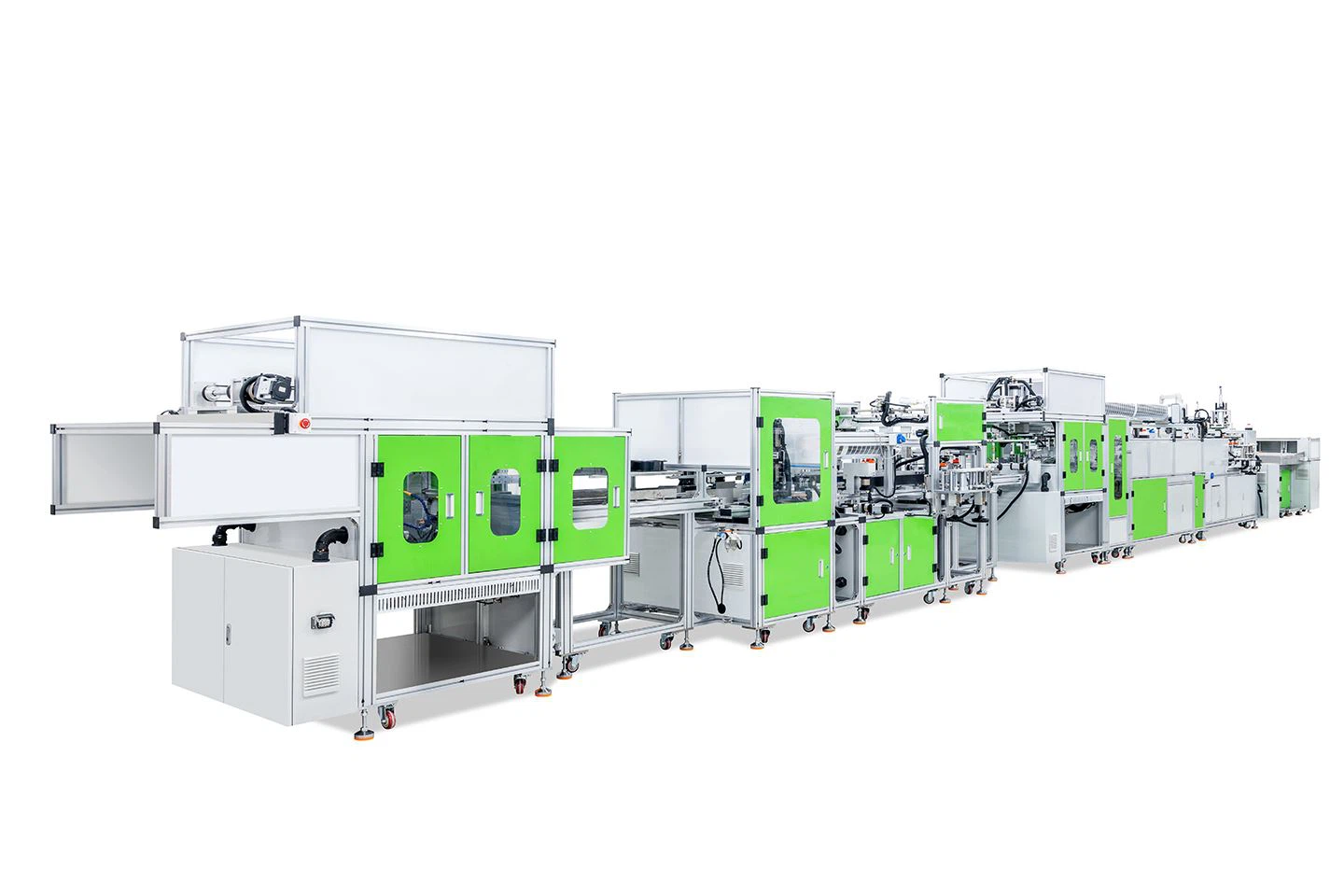
Automobile Air Conditioning Filter Four Side Production Line
This machine enhances productivity, reduces manual labor, and ensures precision in the placement of sealing strips, which is critical for maintaining optimal filter performance in various industrial and commercial applications.

Automotive Air Condition Filter Continuous Pasting Machine
It automates the process of applying adhesive strips or materials to the filter's frame continuously, ensuring precise and consistent bonding. It's typically used in large-scale manufacturing environments to produce filters that meet automotive industry standards.

Automobile Filter Long Edge Fine Cutting Production Line
This type of production line is typically used in large-scale automotive filter manufacturing to enhance efficiency, reduce manual labor, and improve the overall quality of the filters.

HEPA Filter Sealing Strip Sticking Machine
It ensures that the sealing strips are accurately and securely attached, preventing air leakage and enhancing the filter's overall efficiency. Its automation improves production efficiency and consistency in filter manufacturing.
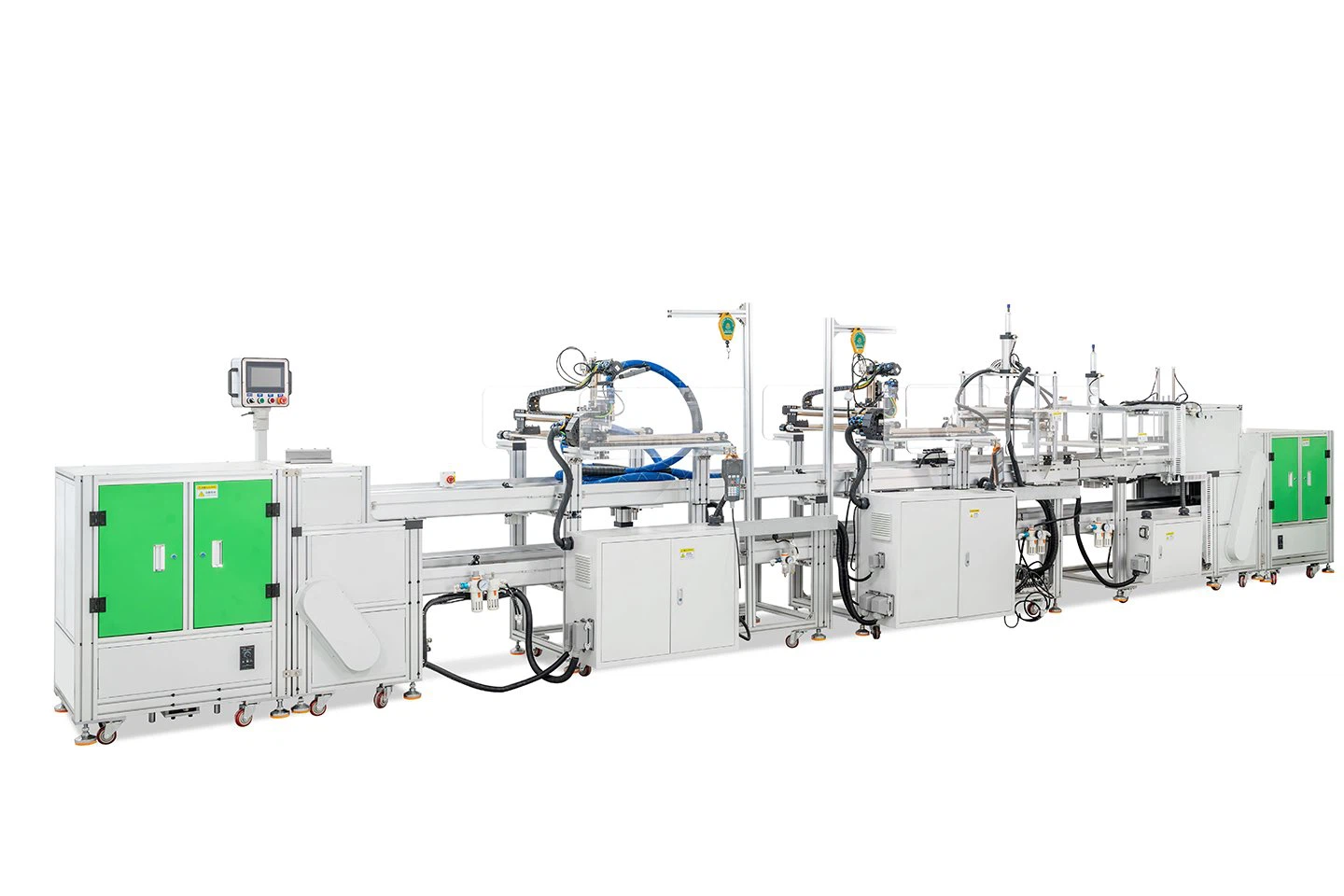
HEPA Automatic Assembling Line
These lines integrate various processes such as frame forming, pleating, filter material placement, sealing, and quality control checks.
What is Three Axis Glue Dispenser
Three axis glue dispenser is also known as the desktop type automatic dispensing machine, used in hot melt adhesive spraying. It is commonly utilized in manufacturing and assembly lines to ensure consistent application of glue or other materials in complex patterns or on specific points. The characteristic is high dispenser efficiency, which can achieve mechanized production and convenient operation.
What is Three Axis Glue Dispenser
Precision and Accuracy: A three-axis glue dispenser allows for highly accurate and controlled dispensing of glue, ensuring consistent application on even the most intricate surfaces.
Increased Efficiency and Speed: With automated controls and programmable settings, a three-axis glue dispenser speeds up the production process. The system can run continuously without manual intervention, significantly increasing production throughput while reducing labor costs.
Consistent Results: The automated nature of the three-axis glue dispenser ensures uniform application of glue across multiple products, minimizing errors or inconsistencies that may occur with manual dispensing.
Reduced Material Waste: The precision of the dispenser reduces glue overuse and spillage, leading to less material wastage. It ensures that only the required amount of glue is used, which lowers costs and minimizes the environmental impact.
Types of Three Axis Glue Dispenser
Automatic three-axis dispensing machine
Automatic systems that can be programmed for different dispensing patterns and volumes. Used in high-volume production environments, such as electronics manufacturing, automotive assembly, and packaging.
Semi-automatic three-axis dispensing machine
Partially automated, requiring some manual input while offering automatic control over the dispensing process. Ideal for small to medium production runs where efficiency is essential, but complete automation is not feasible.
What Are the Key Components of a Three Axis Glue Dispenser
The three-axis glue dispenser is a common dispensing equipment, mainly composed of a body, a control system, a conveying system, a pressurizing system, etc. Among them, the pressurizing system is the most important component of the three-axis dispensing machine. It consists of multiple components working together to achieve efficient operation of the glue dispenser.
The servo motor is a key component for the three-axis glue dispenser to achieve precise dispensing. It can accurately control the movement of the dispensing head in the three directions of the X-axis, Y-axis and Z-axis according to the instructions issued by the control system, thereby achieving precise dispensing. The servo motor has the characteristics of high precision, high response speed and stability, which can meet the needs of the three-axis glue dispenser for high-speed and high-precision movement.
What Types of Glue can be Used With the Three-Axis Glue Dispenser
Hot Melt Glue: These glues are applied in a molten state and solidify upon cooling, offering quick bonding and versatility for various materials.
UV-Curable Glue: These glues cure and bond when exposed to ultraviolet light, making them ideal for precise applications where a quick set time is needed.
Epoxy Resins: Known for their strong bonding capabilities, epoxy resins are suitable for materials like metal, glass, and ceramics, providing excellent durability.
Cyanoacrylate Glue: Also known as super glues, these glue bond quickly and strongly to a variety of surfaces, including plastics, rubber, and wood.
Silicone Glue: These flexible glues offer excellent resistance to temperature changes and moisture, making them suitable for sealing and bonding applications.
Polyurethane glue: Polyurethane glue is a kind of glue with excellent bonding properties, mechanical properties and durability, suitable for bonding in the fields of automobiles, construction, ships, etc.
The Difference Between 3-axis, 4-axis, and 5-axis Glue Dispenser Machine
3-axis glue dispenser machines are the most basic type of glue dispenser machines. They consist of three axes: X, Y, and Z. The X-axis controls the left and right movement of the dispensing part, the Y-axis controls the front and back movement of the workpiece, and Z-axis is responsible for the up and down movement of the dispensing nozzle.
4-axis glue dispenser machines can not only do all of the tasks that 3-axis dispenser machines can do but also have a larger working range. They consist of four axes: X, Y, Z, and R. The R-axis is added to the traditional three axes and it allows the dispensing nozzle to do 360° rotation. This function is particularly designed for inner and outer ring glue dispensing. By manually adjusting the angle of the R-axis, 4-axis glue dispenser machines can dispense at almost any angle along the 360° rotation plane.
5-axis glue dispenser machines are the most advanced type of fluid dispensing machines. They are designed for complex glue applications such as multi-side glue dispensing or dispensing areas that are very difficult to reach. In these cases, only rotating the dispensing nozzle may not be enough. So the 5-axis glue dispenser machines have two R axes in addition to the traditional three axes: X, Y, and Z. It could be one R-axis for the dispensing nozzle rotation and the other one for the rotation of the product. Or it could also be both R-axis for the product rotation.
Application of Three Axis Glue Dispenser
Packaging industry
The three-axis glue dispensers are employed in packaging industry for gluing boxes and cartons, allowing for high-speed production lines to maintain efficiency and quality by ensuring consistent adhesive application on various materials. They ensure even distribution of glue in intricate designs, enhancing the durability and aesthetics of the final product.
Electronics manufacturing industry
In the electronics industry, three-axis glue dispenser are widely used in PCB dispensing, circuit board packaging, coupler packaging, LED packaging, display packaging and other fields. These fields have very high requirements for precision and quality, and three-axis glue dispenser can accurately control the flow and path of glue to ensure the uniformity and accuracy of glue.
Medical device manufacturing industry
In the medical industry, three-axis glue dispenser are widely used in the hydraulic connection and packaging of medical devices. Medical devices have very high requirements for precision and hygiene, and three-axis glue dispenser can accurately control the flow, speed, path and other parameters of glue to ensure the precision and stability of hydraulic connection.
Automobile manufacturing industry
In the automobile industry, three-axis glue dispenser are mainly used in the production lines of automobile lamps, dashboards, electronic controllers and sensors. Automobile manufacturing has very high requirements for precision and quality, and requires large quantity, high efficiency and good stability, and three-axis glue dispenser can just meet these requirements.
Research different types of dispensing machines
There are various types of dispensing machines available, including pneumatic dispensers, auger valve dispensers, time-pressure dispensers, and robotic dispensing systems. Research each type to determine which one best suits your specific application and production requirements.
Evaluate dispensing accuracy and repeatability
Precision and consistency are crucial in dispensing applications, especially in industries like electronics and medical device manufacturing. Look for machines that offer high dispensing accuracy and repeatability to ensure consistent product quality.
Assess ease of use and programming
User-friendly interfaces and intuitive programming capabilities can streamline setup and operation, reducing downtime and training requirements. Look for three axis glue dispenser machines with easy-to-use software interfaces and programmable settings.
Consider material compatibility
Ensure that the three axis glue dispenser machine you choose is compatible with the materials you will be using. Some materials may require specialized dispensing equipment or specific material handling features to prevent contamination or clogging.
Evaluate production throughput
Determine the desired production throughput and efficiency of the dispensing machine. High-speed dispensing systems may be necessary for high-volume production environments, while slower, more precise machines may be suitable for smaller batch sizes or specialized applications.
Budget considerations
While it's essential to invest in a quality dispensing machine that meets your requirements, it's also crucial to consider your budget constraints. Compare the cost of different machines, taking into account not only the initial purchase price but also long-term operating costs and potential ROI.

A 3-axis glue dispenser operates using a combination of precision motion control and automated dispensing technology. They consist of three axes: X, Y, and Z. The X-axis controls the left and right movement of the dispensing part, the Y-axis controls the front and back movement of the workpiece, and Z-axis is responsible for the up and down movement of the dispensing nozzle.
With X-axis and Y-axis working together, the glue dispenser can complete all of the plane dispensing tasks such as dots, lines, arcs, and compound arcs glue dispensing. And these tracks are not limited to one horizontal plane. With Z-axis joining the dispensing movement, 3-axis glue dispensers can do true 3D motion. When activated, the dispenser moves the nozzle to the designated position while simultaneously applying the adhesive, which can be adjusted in flow rate and volume.
How to Maintain Three Axis Glue Dispenser
Keep the machine clean
This might seem like an obvious one, but it's often overlooked. Adhesive residue can harden and cake on the nozzles and needles over time, affecting the flow and accuracy of material delivery. To prevent this from happening, make sure to regularly clean both the internal and external parts of the machine with a mild solvent such as alcohol or acetone. For tougher buildup, specialized cleaning solutions are available.
Lubricate
Regularly lubricate the moving parts of the three-axis system to ensure smooth operation and prevent wear on the mechanical components. However, you should be careful not to overdo it as too much lubricant can actually damage the machine by attracting dust and dirt. Apply a small amount of lubricant to the parts as needed, and wipe away any excess before using the machine.
Be wary of moisture and humidity
Adhesives are hygroscopic, which means that they can absorb water from the air over time. In humid or moist environments, this can lead to clogging, leaks, and other problems with your adhesive dispensing machine. To avoid these issues, keep your machine in a dry environment and always keep it covered when not in use.
Check for leaks
Periodically inspect the glue lines and connections for any leaks or damage. Replace worn-out parts immediately to avoid inconsistent dispensing. Perform routine calibration of the dispenser to ensure accurate glue placement and prevent issues with alignment on the three axes.
Use the right pressure and speed settings
Every adhesive has its own recommended flow rate and dispensing speed, which will vary depending on the viscosity of the material. To ensure that your machine is working properly, make sure to adjust these settings according to the type of adhesive you're using.
Use the right type of adhesive
Not all adhesives are created equal, and using the wrong type can damage your machine. Make sure to consult your adhesive manufacturer or supplier to find out which type of adhesive is best for your application and machine.
FAQ
Hot Tags: three axis glue dispenser, China three axis glue dispenser manufacturers, suppliers, factory, Round Filter Glue Dispensing Machine, Hot Glue Melt Machine, HEPA Filter Sealing Strip Sticking Machine, Knife Pleating Machine, household filter production line, Semi Auto Carbin Air Filter Gluing Machine


